Acreage near Nathrop can be exciting at first glance, but the real value of a parcel is not just the view or the number of acres. If you are hoping to build, hold land, or create a future retreat, you need to know whether the property can actually function the way you want it to. The good news is that a careful review of access, water, septic, and hazard constraints can help you move forward with more confidence. Let’s dive in.
Why acreage due diligence matters
In Chaffee County, raw land deserves a different level of review than a typical in-town home purchase. The county reports that roughly 120,000 acres are privately owned outside incorporated towns, and its current land use code took effect January 1, 2025, with an amendment on September 16, 2025.
That matters because a parcel that looks simple in a listing may involve zoning limits, overlays, driveway requirements, utility questions, or environmental review. When you buy acreage near Nathrop, these are not side issues. They are often the core of whether the land works as a future homesite.
Confirm legality and buildability first
One of the biggest mistakes acreage buyers make is assuming that a tax parcel is automatically build-ready. In Chaffee County, development must comply with the current land use code, so the first step is confirming whether the parcel is legally buildable for your intended use.
The county GIS is a smart place to begin. It can show zoning, floodplains, steep slopes, wildfire risk, wildlife habitat mapping, and other parcel-level layers that may affect how and where you can build.
You also want to review the parcel’s subdivision history and any applicable overlays. A property can be appealing on paper but still require additional review before a homesite, driveway, or utility setup is approved.
What to verify early
- Zoning and whether your intended use is allowed
- Overlay districts or hazard areas affecting the parcel
- Subdivision history or exemption status
- Whether a pre-application conference with county staff makes sense
Chaffee County’s application menu includes a Rural Land Use Process, subdivision exemptions, a Right-of-Way/Driveway Permit, a Floodplain/Hazard Development Permit, and OWTS review for septic. That list alone tells you that parcel review often involves multiple moving parts.
Treat access like a major buying decision
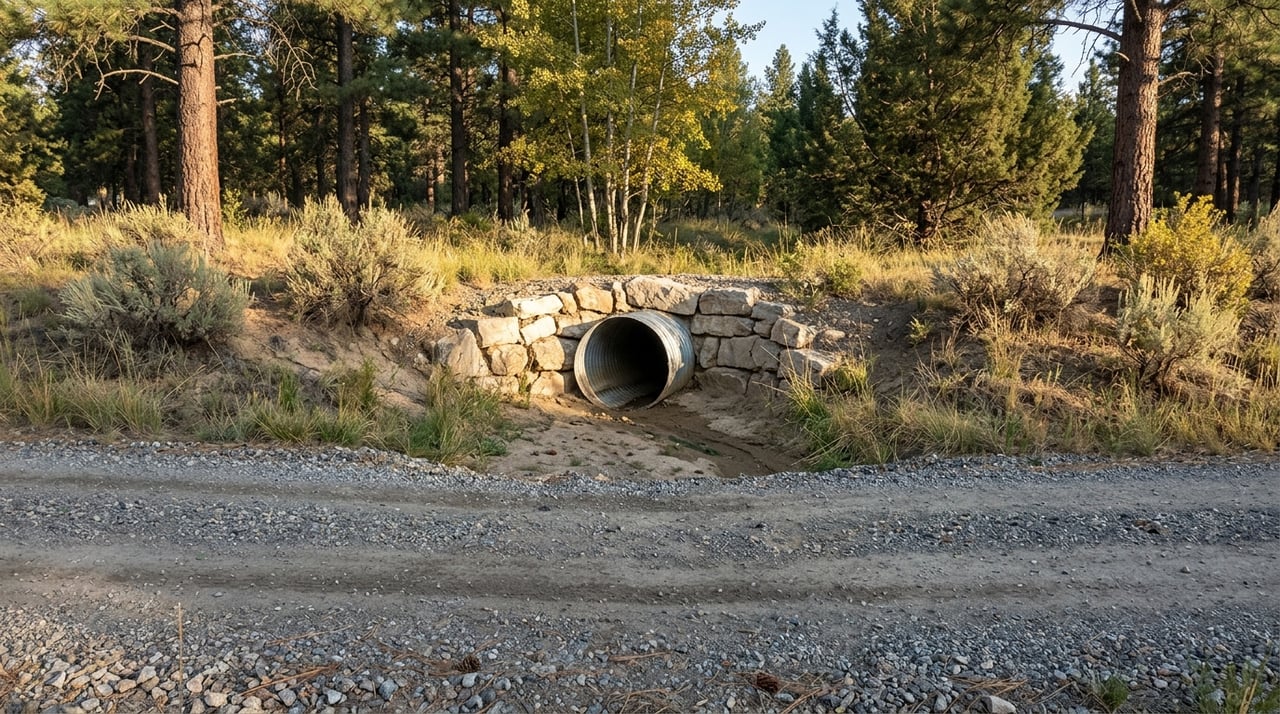
A beautiful parcel is much less attractive if access is uncertain in January or difficult during construction. In this area, road access and seasonality should be treated as a central part of your decision, not a minor detail.
Chaffee County Road & Bridge maintains about 300 miles of roads, but maintenance levels vary. Some roads are maintained on a very limited basis, and some may only be maintained in summer.
That means you should ask direct questions before you commit. Who maintains the road? Who plows it? How often is it graded? Is the road county-maintained, privately maintained, or seasonal?
Access questions worth asking
- Is the access road public or private?
- Is winter plowing available and dependable?
- Will you need a driveway or right-of-way permit?
- Is there a recorded road maintenance agreement?
- Will construction traffic trigger additional access requirements?
The county code and planning materials also point to road maintenance agreements and heavy vehicle routing considerations. If you plan to build, it is important to understand both daily access and construction access before removing contingencies.
Wildfire rules can affect access too
For larger parcels, access is not only about convenience. It can also be part of meeting wildfire standards.
Chaffee County’s wildfire standards state that parcels larger than 10 acres need an alternate access road in addition to the primary driveway unless the fire district approves an alternative. Driveways also have standards for clear width, vertical clearance, turnarounds, and turnouts.
If you are comparing multiple acreage properties, this can make a big difference in cost and feasibility. A parcel with a long driveway and challenging terrain may require more work than you first expect.
Verify water before you get attached
Water is one of the most important parts of buying land in Chaffee County. If a parcel relies on a private well, you need to know what the well permit allows, not just whether a well exists or could be drilled.
Colorado’s Division of Water Resources notes that the well permit file contains the allowable uses of a well, and that information is especially important in a real estate transaction. Some wells are limited to household use only, which means no uses outside the home beyond basic sanitary and residential consumption.
That distinction matters if you are dreaming about irrigating, keeping animals, or using water in ways beyond basic household needs. The water plan has to match your intended use.
Water items to confirm
- Whether there is an existing well permit
- What the permit allows
- Whether the parcel may need augmentation or another water-supply solution
- Whether public water service is available nearby
Chaffee County’s code also says connection to a public water supply is required when service is available within 400 feet, adequate, and feasible. So if a parcel sits near central service, you should confirm whether a connection could be required instead of assuming a private solution.
Check septic feasibility early
Septic is another area where land can look promising until the technical review begins. In Chaffee County, OWTS review is part of the planning process for qualifying systems, and the county code states that where OWTS are proposed, a septic suitability report must be prepared by a Colorado-licensed engineer.
That means soils, slope, spacing, and site conditions can directly affect whether the parcel supports your plans. A nice building area on a tour is not enough on its own.
Chaffee County Public Health notes that it does not perform OWTS inspections, so you want to understand early which office handles what part of the review. The goal is to avoid learning too late that septic design is more constrained or costly than expected.
Septic due diligence checklist
- Ask whether an engineer-reviewed septic suitability report will be needed
- Review slope and potential building areas
- Confirm which office handles OWTS review
- Understand whether site conditions could limit your building envelope
Review hazards and physical constraints
Mountain land often comes with layers of natural constraints that are not obvious from a listing photo. Chaffee County’s GIS and land use tools highlight floodplain, fluvial hazard zones, wildfire risk, steep slopes, and wildlife habitat mapping.
If a parcel lies in a special flood hazard area, development requires a Floodplain Development Permit. Fluvial hazard zones have their own review path as well, which can affect where and how improvements are placed.
The county code also calls for avoidance or mitigation around wetlands, riparian areas, and wildlife habitat. In practice, that means the part of the property with the best view may not be the easiest or most practical place to build.
Parcel layers to review
- Floodplain
- Fluvial hazard zones
- Wildfire risk
- Steep slopes
- Wildlife habitat mapping
- Wetlands or riparian considerations
Do not skip easements and recorded documents
With acreage, legal access and shared infrastructure are just as important as physical access. A road may appear obvious on the ground, but you still need to confirm whether there is a recorded right to use it.
In subdivision and easement-heavy situations, county materials reference utility easements, survey monuments, and recorded covenants. If access, utilities, or shared infrastructure are unclear, a survey and recorded-document review are usually worth the time.
This is especially important before you waive contingencies. A parcel can be usable in theory but still become more complex if easement terms, setbacks, or shared responsibilities are not fully understood.
Build your due diligence team
Acreage purchases often benefit from a more specialized review team than a standard home purchase. County staff can be a practical first call because Planning & Zoning works closely with Road & Bridge, Building Safety, and Environmental Health, and the county offers pre-application conferences.
Depending on the parcel, buyers near Nathrop often need support from a land-focused real estate advisor, a title professional or private attorney, a surveyor, a well driller, a septic designer or installer, and an engineer when slope, floodplain, access, or wastewater questions are unresolved.
The right team helps you turn scattered questions into a clear go or no-go decision. That clarity is often what protects your budget and timeline.
A simple acreage buying checklist
Before you commit to land near Nathrop, make sure you have solid answers to these core questions:
- Does zoning allow your intended use?
- Are there floodplain, fluvial, wildfire, slope, or habitat constraints?
- Is the parcel legally buildable under the current code?
- Who maintains the road, and how does winter access work?
- Will you need a driveway permit or road maintenance agreement?
- What does the well permit allow?
- Is public water or wastewater service close enough to trigger connection requirements?
- Is septic feasibility supported by the site conditions?
- Are recorded easements, covenants, and access rights clear?
If those answers line up, the parcel may be a strong candidate. If they do not, it is better to know before you are emotionally attached or too far into the process.
Buying land in Chaffee County can be incredibly rewarding, but only when the practical pieces support the dream. If you want experienced, clear-eyed guidance as you compare acreage near Nathrop, connect with Mary Kale for local insight and steady support through the due diligence process.
FAQs
What should you check before buying acreage near Nathrop?
- You should confirm zoning, buildability, road access, winter maintenance, water rights or well permit limits, septic feasibility, hazard overlays, and recorded easements before removing contingencies.
Why is road access so important for land in Chaffee County?
- Road maintenance can vary by location, and some roads are maintained only on a limited basis or in summer, so you need to know how access works in both daily life and winter conditions.
Can a tax parcel near Nathrop automatically be used as a homesite?
- No. Chaffee County’s land use code requires development to comply with current rules, so a tax parcel is not automatically a build-ready lot.
What water issue should buyers verify on acreage near Nathrop?
- You should review the well permit file to confirm the allowed uses, because some wells are limited to household use only and may not support your broader plans.
How do septic rules affect buying raw land in Chaffee County?
- Septic feasibility can depend on soils, slope, spacing, and engineering review, so a parcel needs more than a good view to work as a build site.
When should you review hazard maps for acreage near Nathrop?
- You should review parcel-level hazard maps early in the process so you can identify floodplain, fluvial hazard, wildfire risk, steep slopes, and habitat constraints before you commit.